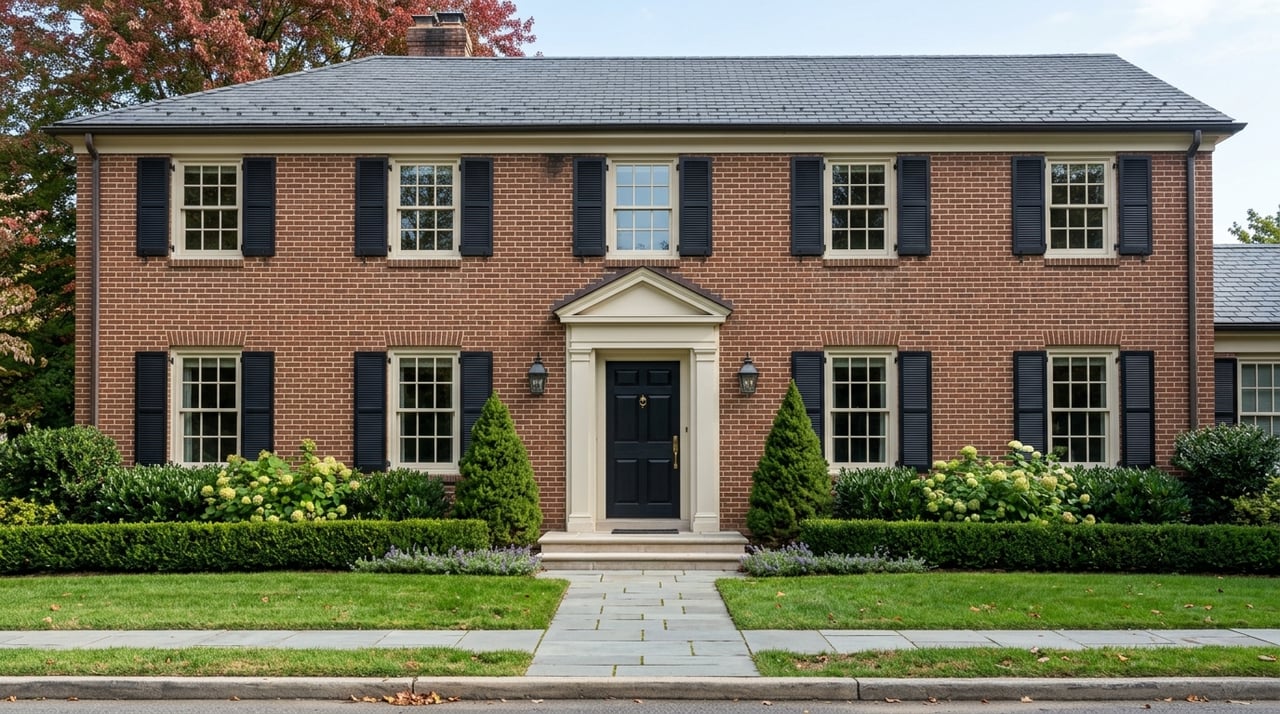
Looking at in-town Princeton homes can feel a bit like walking through a living design timeline. On one block, you may see a restrained brick façade with classical symmetry. A few minutes later, you are standing in front of a porch-rich Victorian row or a tree-lined street with deeper setbacks and larger lawns. If you want to understand what makes these homes distinct, it helps to look beyond labels and see how architecture, streetscape, and local history work together. Let’s dive in.
Why in-town Princeton feels so layered
Princeton’s in-town housing is not defined by one single style. The municipality describes it as a layered historic landscape, and that idea shows up clearly when you move from Nassau Street to nearby residential blocks.
Part of that character comes from preservation. Princeton has 21 local historic-preservation overlay districts, and the Office of Historic Preservation reviews exterior alterations and new construction in designated districts to help keep them compatible with their surroundings.
That local framework helps explain why the town center feels cohesive even though the buildings come from different periods. National Park Service records for the Princeton Historic District also reflect that range, noting Mid 19th Century Revival, Late Victorian, and Colonial styles.
Start with the streetscape
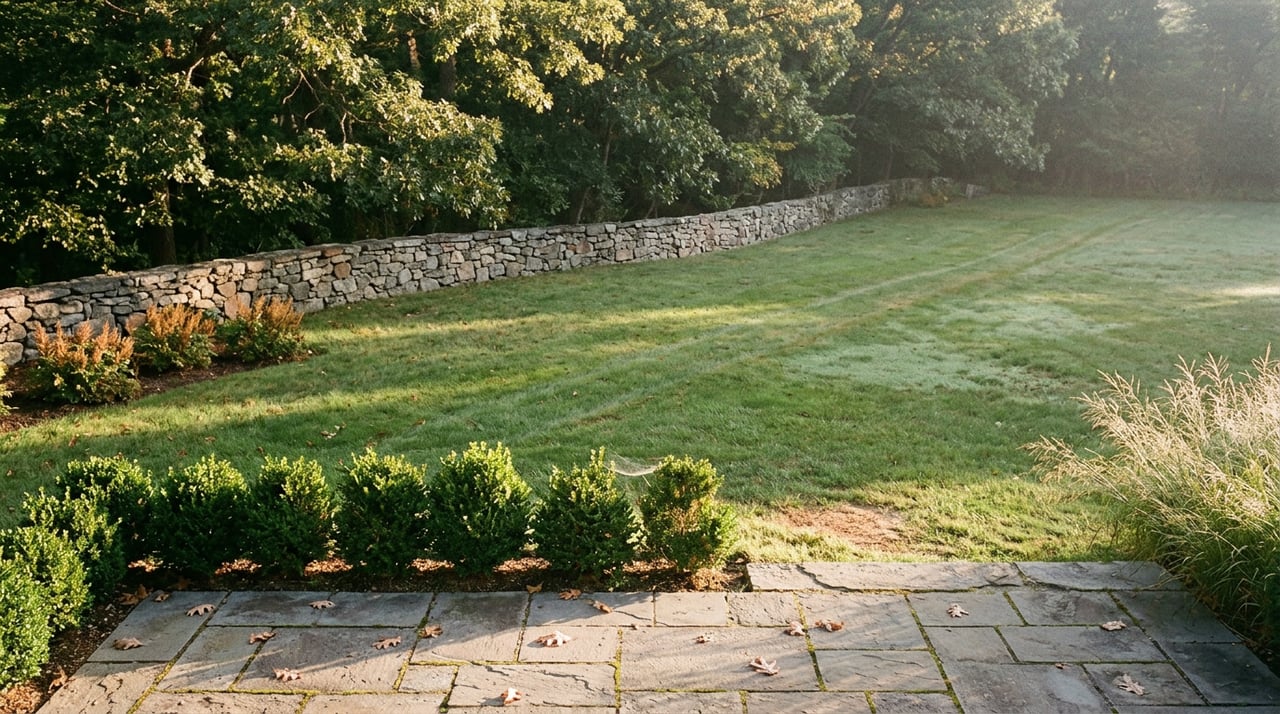
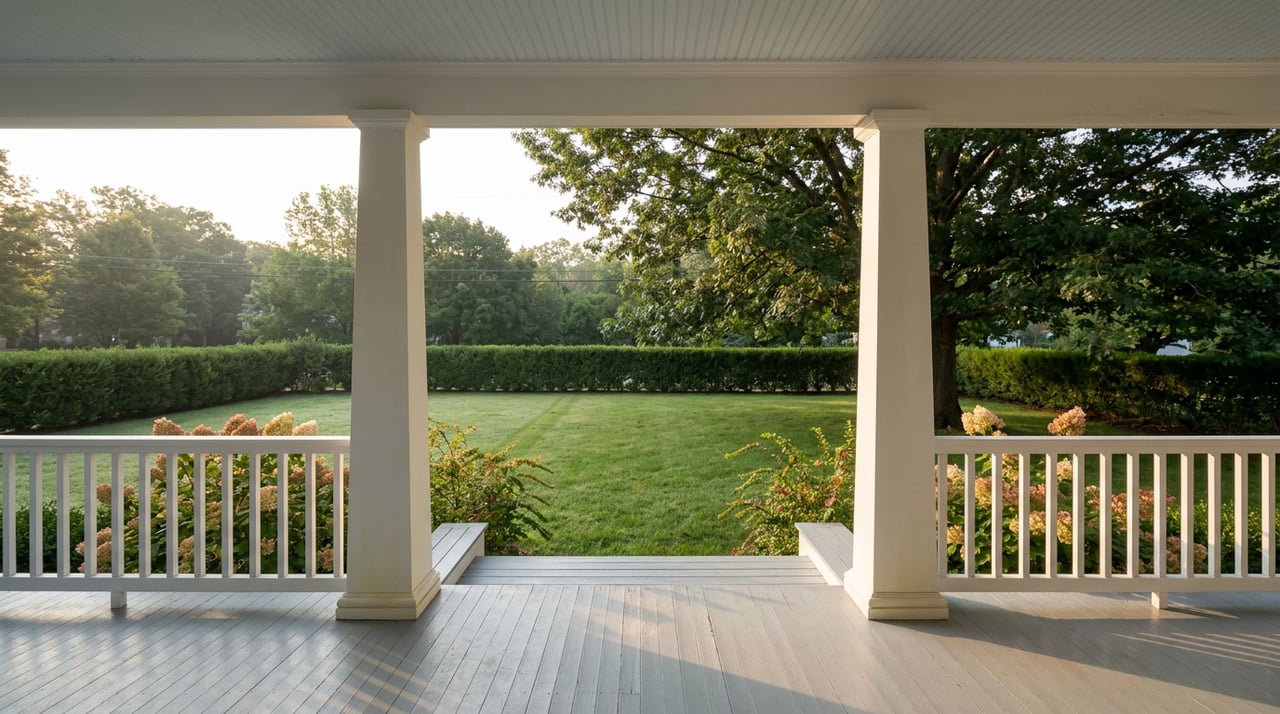
If you are touring homes in town, the most useful first step is to notice the street before you focus on the house. In Princeton, architectural character is often just as much about setback, porch depth, lot width, tree canopy, and the mix of residential and commercial buildings as it is about trim details.
That is why one short walk can feel so different from the next. The Nassau Street core is denser and more mixed-use, while nearby streets may feel quieter, greener, and more residential.
For buyers, this matters in practical terms. Two homes may fall under broad labels like Colonial Revival or Victorian, but the daily feel of each setting can be very different depending on the block.
Federal, Georgian, and Colonial homes
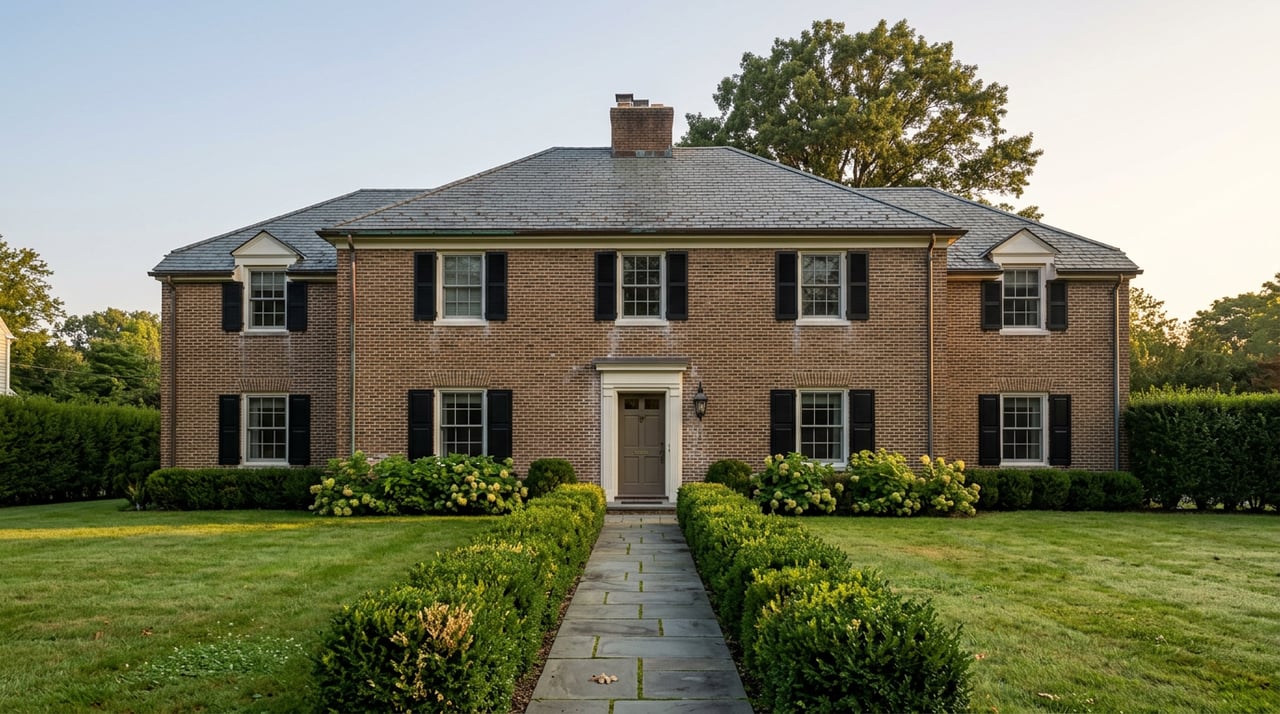
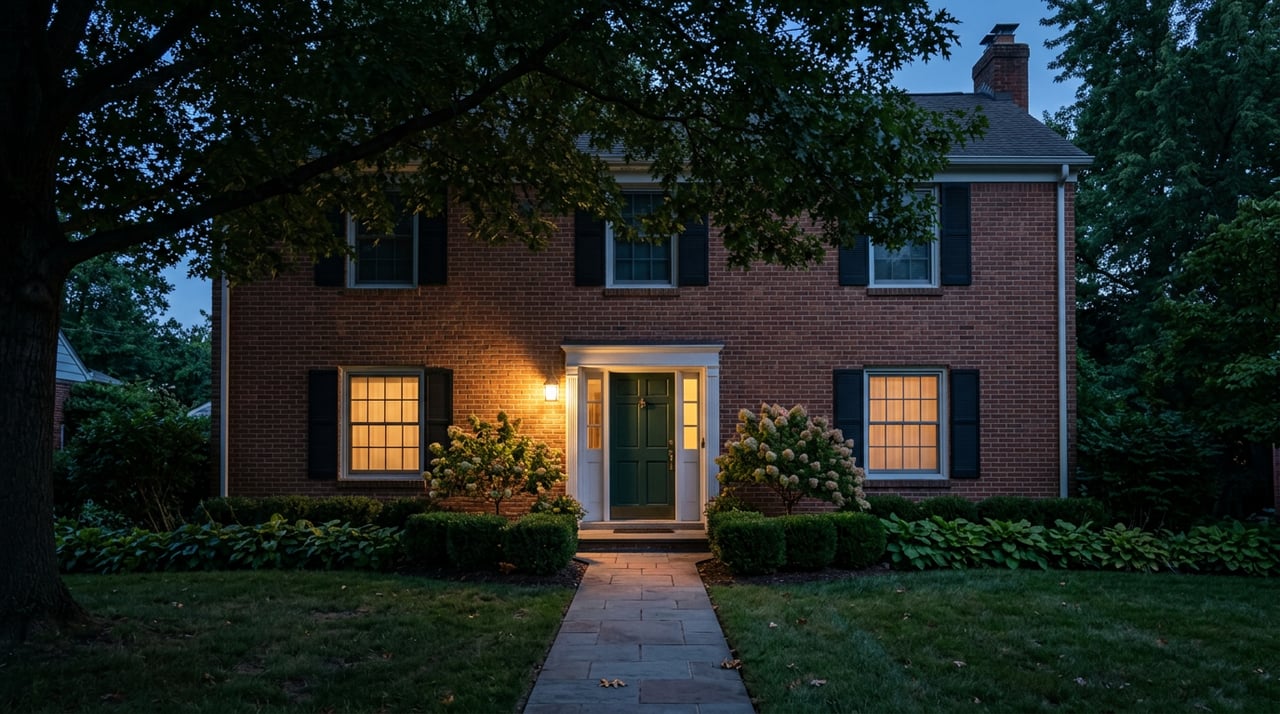
Some of Princeton’s oldest in-town homes are the most restrained in appearance. Federal, Georgian, and Colonial houses often read as symmetrical, classically balanced, and relatively modest in ornament compared with later 19th-century styles.
In Jugtown, Princeton’s survey describes modest 18th-century brick dwellings and later wood-framed Federal houses with carved details and fanlights. Mercer Hill also includes Federal and Georgian houses, along with Colonial Revival examples.
When you see these homes in person, look for simple proportions, orderly window placement, and a composed street presence. They often feel timeless rather than flashy, which is part of their appeal in Princeton’s historic core.
Greek Revival homes
Greek Revival architecture brings a more formal and temple-like quality to the streetscape. Pedimented fronts, stronger porch emphasis, and a more clearly classical outline are common traits of the style.
Princeton examples include the Joline-Gulick House, and Mercer Hill also includes Greek Revival homes. On a walking tour, these buildings often stand out because they feel more monumental and ceremonial than earlier, simpler house forms.
For a buyer, Greek Revival details can shape first impressions in a big way. Even when the home is not large, the style can create a strong sense of presence from the street.
Italianate, Victorian, and Queen Anne homes
As you move into Princeton’s later 19th-century layers, the architecture often becomes more decorative and varied. Italianate, Victorian, and Queen Anne homes tend to feature bracketed eaves, bay windows, porch ornament, and more asymmetrical massing.
Princeton’s 156-158 Witherspoon Street is identified as Italianate. Mercer Hill includes Victorian houses, and Bank Street is especially notable for its cohesive row of vernacular Queen Anne houses built between 1897 and 1906.
These homes often reward a slower look. The charm is in the details, from decorative trim to porch shapes to the way a row of houses creates a unified street rhythm.
Colonial Revival and Tudor Revival layers
Early 20th-century Princeton added another visual chapter. Colonial Revival and Tudor Revival buildings brought fresh interpretations of older architectural traditions, adding to the town’s already broad stylistic mix.
In the central district, Palmer Square represents a Colonial Revival layer, while Lower Pyne is noted for Tudor Revival architecture. Mercer Hill and Jugtown also include Colonial Revival houses.
For many buyers, these homes feel familiar because they borrow from older forms while often presenting a more polished early 20th-century expression. In town, they help bridge Princeton’s earliest architecture with later residential growth.
Vernacular homes in Witherspoon-Jackson
One of the most distinctive in-town areas is Witherspoon-Jackson, where architecture and community history are closely tied. Princeton describes Witherspoon Street as the heart and historical center of the Black community, and the area includes a broad mix of house types.
The streetscape here tells an important story. Many houses date from the early and mid-19th century, sit roughly 8 to 12 feet from the curb, and make strong use of porches and stoops.
This part of town also includes less formal vernacular houses, twin houses, an American Foursquare on John Street, and a Prairie example in the neighborhood. The result is a residential pocket that feels socially and architecturally varied rather than uniform.
A closer look at key in-town pockets
Central Historic District
The Central Historic District covers Princeton’s core business district and large portions of Princeton University. Its buildings represent the 18th through 20th centuries, which is why this area can feel especially rich and layered.
Along Nassau Street, you will find a stronger commercial presence and a broader stylistic mix. The master plan cites styles including Federal, Second Empire, Renaissance Revival, and Colonial Revival, along with major landmarks and institutional buildings.
Jugtown
Jugtown, near Nassau and Harrison, has a compact hamlet feel. It was first settled by Europeans in 1695, and its historic fabric includes modest brick dwellings, later Federal-style wood houses, and later Queen Anne and Colonial Revival additions.
For buyers, Jugtown offers a good example of how Princeton’s architecture evolved in small increments over time. The variety is real, but the area still reads as cohesive.
Mercer Hill
Mercer Hill feels like the elegant residential edge of the core. A Historic Preservation Officer report describes it as a residential district interspersed with educational and religious institutions, transitioning from the central business district to single-family houses with tree-lined streets and manicured lawns.
The houses along Mercer Street generally date to the mid-19th century and range from Greek Revival, Georgian, and Federal to some Italianate. This is one of the clearest places to see how architecture and landscape work together in Princeton.
Bank Street
Bank Street stands out because of its visual cohesion. Princeton describes it as a highly cohesive and well-preserved district of vernacular Queen Anne-style houses with Victorian decoration, built between 1897 and 1906.
If you are drawn to homes that feel connected to a strong block identity, this street is a memorable stop. The architecture is expressive, but the consistency of the row is what really leaves an impression.
Witherspoon Street, Green Street, and John Street
These streets show another side of in-town Princeton. Witherspoon Street is historically significant and architecturally varied, while Green Street is wider, more tree-lined, and noted for a small-town ambiance.
According to Princeton’s survey, about 70 percent of Green Street’s houses predate 1880. At the same time, the area also reflects change over time, including documented new construction and demolition during later surveys.
Where newer infill fits in
Not every in-town home is historic, and that is part of the broader Princeton story too. Municipal records note later construction and replacement forms, including modern noncontributing buildings in historic contexts.
Still, newer infill is best understood as a secondary layer rather than the dominant visual language of Princeton’s historic core. That contrast helps explain why central Princeton still feels so rooted in earlier architecture even as newer housing appears elsewhere in the municipality.
What to know before renovating
If you are considering an in-town purchase with renovation plans, local preservation review is important to understand early. In designated districts, Princeton’s Office of Historic Preservation reviews preservation plans for exterior work and new construction.
Some applications can be approved administratively, and ordinary maintenance is usually exempt when you are replacing deteriorated material with the same material, color, and dimensions. Depending on the district, work visible from the public right-of-way, additions, siding changes, roof changes, window replacements, fencing, landscaping, and demolition can trigger review.
For buyers, that does not have to be a drawback. It simply means the process deserves the same careful planning as the home search itself.
How to tour Princeton homes well
When you tour in-town Princeton, try to evaluate each home on two levels:
- The architecture of the house itself
- The feel of the surrounding street
- The relationship between the home and its setback, porch, and lot
- The balance between historic character and future upkeep
- Whether the block feels mixed-use, compact, or primarily residential
This approach gives you a more accurate read than style labels alone. In Princeton, the setting is often just as important as the façade.
If you are drawn to in-town Princeton, it helps to work with someone who understands both the visual language of the town and the practical details that shape a smart purchase. From Mercer Hill’s tree-lined streets to Bank Street’s Queen Anne row and the layered blocks around Witherspoon-Jackson, each pocket offers a distinct experience. For tailored guidance on buying or selling an in-town Princeton home, connect with Helen Sherman.
FAQs
What architectural styles are common in in-town Princeton homes?
- In-town Princeton includes Federal, Georgian, Colonial, Greek Revival, Italianate, Victorian, Queen Anne, Colonial Revival, Tudor Revival, vernacular, American Foursquare, and some Prairie-style examples.
What makes Princeton’s in-town neighborhoods feel different from one another?
- The biggest differences often come from streetscape features such as setbacks, porches, tree canopy, lot width, and whether the area is mixed-use or mainly residential.
What is distinctive about Mercer Hill homes in Princeton?
- Mercer Hill is known for tree-lined streets, manicured lawns, and a mix of mid-19th-century houses that include Greek Revival, Georgian, Federal, and some Italianate styles.
What is distinctive about Bank Street homes in Princeton?
- Bank Street is notable for its highly cohesive row of vernacular Queen Anne-style houses with Victorian decoration, built between 1897 and 1906.
What should buyers know about renovating historic homes in Princeton?
- In designated districts, exterior work and new construction may require review by Princeton’s Office of Historic Preservation, while ordinary maintenance is generally exempt when materials, color, and dimensions remain the same.