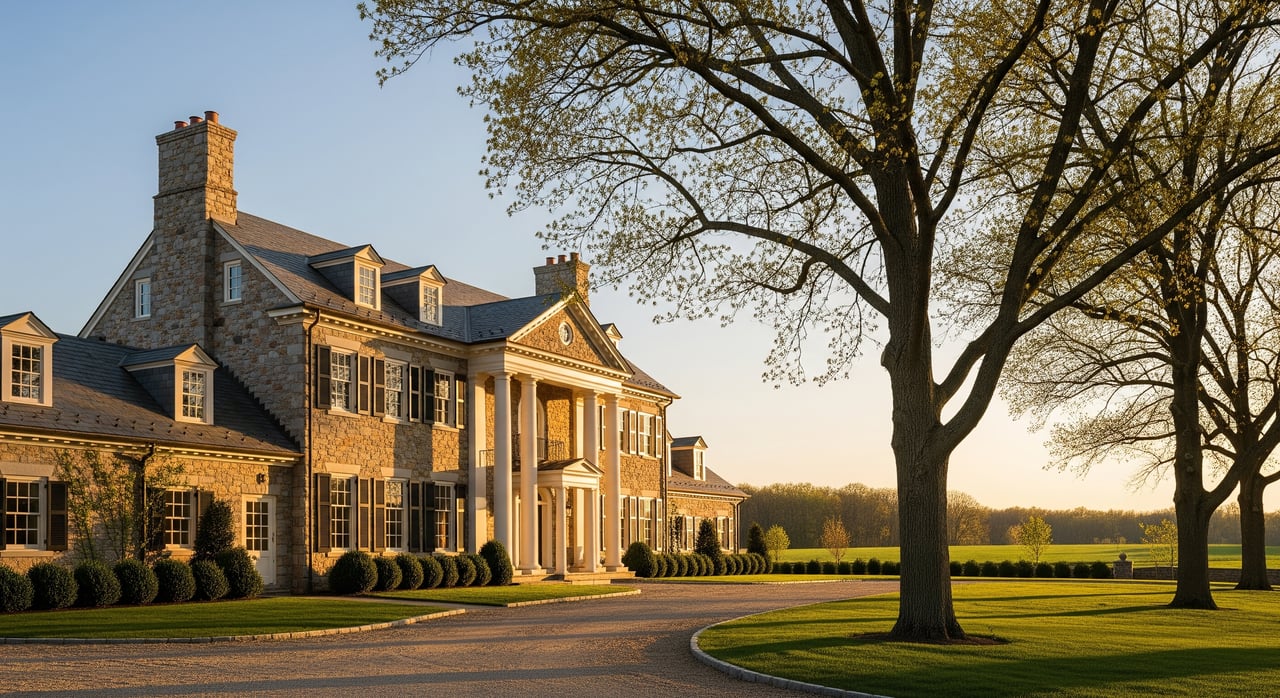
Is your Hopewell estate hard to price because there are few direct comparables and every property feels one of a kind? You are not alone. Estate homes in Mercer County often sit on larger acreage, carry unique features, and attract a selective buyer pool. In this guide, you will learn a clear, data-backed framework that helps you set a confident list price, protect your value, and reduce days on market without leaving money behind. Let’s dive in.
What drives Hopewell estate pricing
Buyer pool and location advantages
Hopewell Township sits in central New Jersey near Princeton with access to New York City and Philadelphia. That reach draws well-qualified buyers who value privacy, acreage, and proximity to cultural and academic amenities. Many are local high-net-worth residents, relocating professionals, or second-home buyers. International or institutional buyers are less common at the municipal level but can be active for exceptional properties.
Land use and tax factors
Carrying costs matter. Property taxes and municipal levies in Mercer County often factor into buyer affordability and offer strength. Land-use rules can also influence value and your pool of buyers. Conservation easements, agricultural and historic restrictions, wetlands buffers, and septic and well requirements can limit improvements and reduce usable acreage. Floodplain and environmental maps help confirm whether all acres are truly usable.
Scarce inventory and comp volatility
Luxury estates are a small slice of the market. With limited recent sales, pricing by simple averages is risky. The result is more price volatility and a wider spread between asking and achieved prices. A disciplined framework that weighs land, architecture, and unique amenities will give you a stronger, defensible number.
A valuation framework that works
Quantify core value components
Start by defining the full asset, not just the house.
- Land value: highest and best use, buildable and usable acres, privacy, views.
- Structure and finish: architectural significance, square footage, materials, condition.
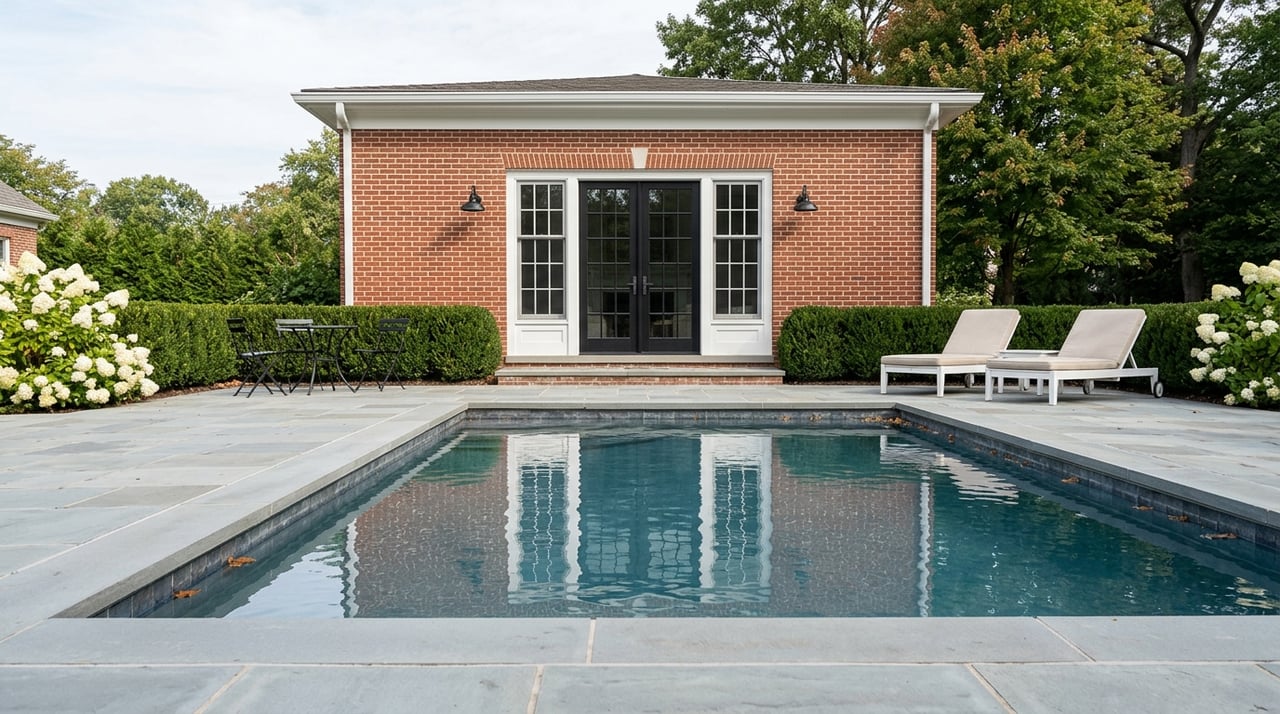
- Functional amenities: guest house, pool and pool house, barns, riding rings, ponds or streams, gardens.
- Provenance: notable architect, historic designation, ownership history that buyers recognize.
- Utility and entitlements: septic and well capacity, utility connections, permits, subdivision or accessory dwelling potential.
- Carrying costs: annual taxes, maintenance, insurance, especially for waterfront or historic components.
Document each item with surveys, permits, plans, specifications, and service records where possible. Buyers pay more when they can verify value.
Use multiple approaches
Rely on more than one method and reconcile your results.
- Comparable sales approach: the primary tool. Focus on acreage and usability, architectural quality, and proximity. If there are few local comps, expand the radius and show clear adjustments.
- Cost approach: helpful for newer or unique builds to frame a floor or ceiling based on replacement cost. It is less reliable for older or iconic homes whose market value may exceed build cost.
- Income approach: consider only if parts of the property generate income, such as a rental cottage, leased farmland, or event space. Use as a secondary check.
- Supplemental analytics: price per usable acre and careful price per square foot comparisons can reveal patterns, but always interpret alongside quality and location.
Metrics that matter in Hopewell
- Price per acre vs price per usable acre: buyers value flat, accessible, buildable land. A 10-acre parcel with wetlands may price closer to a smaller but fully usable site.
- Price per square foot of living area: in luxury properties, this number becomes less reliable as homes get larger or more customized. Always pair PSF with land and quality adjustments.
- Feature adjustments: pool, guest house, finished lower level, equestrian facilities, water frontage, and advanced energy or security systems can add measurable premiums when supported by nearby sales.
Bring in an experienced appraiser
For rare estates, a luxury-competent appraiser who knows Mercer County can provide an independent valuation using cost and comparable methods. Pair that with a broker market analysis that reflects current buyer behavior and marketing strategy. Reconciling both helps you choose a price with confidence.
Build a defensible price range
Create a value band and net sheet
Set a low, likely, and high value band rather than a single target. Your initial list price generally sits at the middle of the band, then shifts based on goals for speed or price maximization. Prepare a detailed seller net sheet for each price scenario. Include transfer fees, legal fees, anticipated repairs or credits, and appraisal gap risks so you understand walkaway proceeds.
Comp selection when sales are scarce
Start with 3 to 5 of the closest matches in Mercer County or adjacent markets. If you cannot find clear matches in Hopewell, prioritize properties with similar acreage, usability, architectural quality, and proximity to Princeton and commuter routes. Expand the radius as needed and document each adjustment in plain language. A transparent rationale gives buyers and appraisers confidence in your ask.
Adjust for unique features
Translate special features into supportable adjustments. Examples include:
- Usable acreage changes when wetlands or steep slopes limit building or recreation.
- Architectural significance premium based on sales of similarly designed homes or recognized architects.
- Guest houses, barns, or equestrian infrastructure priced from local comp differences.
- Renovation status and material quality reflected in recent sales with similar finishes.
Do not apply blanket multipliers. Test each adjustment against one to three strong comps where possible.
Listing strategy to protect price
Positioning and presentation
Premium marketing supports premium pricing. Invest in professional photography, drone imagery, architectural floor plans, and video. Create a detailed property book with surveys, permits, utility and tax runs, systems summaries, and recent improvement invoices. Stage key rooms to show scale and lifestyle such as entertaining spaces, office suites, and outdoor amenities.
Private vs public launch
For truly one-of-a-kind estates, consider a short private or off-market phase with outreach to qualified buyer lists and trusted broker networks. This can surface motivated buyers without the pressure of public days on market. If broader reach is needed, move to an MLS launch with a tight narrative and high-touch showing process. A two to four week pre-market campaign can build anticipation and qualify prospects before day one.
Offer review and negotiation
Qualify buyers early. Give priority to cash or well-documented financing, including appraisal cushions if relevant. Consider escalation clauses, then compare net proceeds and certainty, not just headline price. Show flexibility on closing timelines or selected concessions instead of reflexive price cuts.
Your step-by-step pricing checklist
- Define the product. Map usable acreage, topography, wetlands or buffers, and all structures with accurate square footage.
- Verify entitlements. Confirm septic capacity, well details, easements, setback rules, and any conservation or historic restrictions.
- Assemble comparables. Identify 3 to 5 comp sales with similar land utility and architectural quality. Expand the search radius if needed and note each adjustment.
- Run multiple metrics. Calculate price per acre, price per usable acre, price per square foot for main living areas, and review recent days on market for peer properties.
- Estimate replacement cost. Frame a ceiling or floor with a thoughtful cost approach, especially for newer or highly specialized construction.
- Evaluate income, if any. Consider rentals, agricultural leases, or event income only as a secondary cross-check.
- Build a value band. Set low, likely, and high values that reflect condition, uniqueness, and buyer pool depth.
- Prepare your net sheets. Model net proceeds for different price points and potential negotiation items so you can act decisively.
- Produce your property book. Include photography, floor plans, surveys, permits, utility runs, tax history, and system summaries.
- Choose your launch plan. Decide on private outreach, a coming-soon period, or a full MLS debut with a clear timeline and narrative.
Common pitfalls to avoid
- Chasing unusable acreage. Buyers pay a premium for land they can use, not total acreage alone.
- Overweighting price per square foot. PSF without land and quality context can lead you off-target.
- Testing an aspirational price too long. Extended days on market can signal weakness to qualified buyers.
- Skipping documentation. Missing permits, septic records, or surveys can slow deals and weaken your position.
- Ignoring carrying costs. Taxes and maintenance affect buyer calculations and should inform your price band.
A local approach that travels well
The strongest results come from a blend of local knowledge and disciplined valuation. In Hopewell and greater Mercer County, you are often pricing a lifestyle and a set of entitlements as much as a house. By quantifying usable land, verifying constraints, and aligning marketing with a well-supported price band, you invite serious, qualified buyers to act quickly and confidently.
When you are ready to talk strategy for your specific estate, connect with Helen Sherman for a tailored valuation and a concierge-level selling plan.
FAQs
How do I price an estate in Hopewell when there are few comps?
- Use a broader comp set with clear adjustments, pair it with a cost approach ceiling, and bring in a luxury-experienced appraiser to reconcile a defensible value band.
Do usable acres matter more than total acres in Mercer County?
- Yes, buyers typically value buildable, accessible, and functional land over gross acreage, so calculate both and price to the utility of the site.
Will historic or architect-designed homes in Hopewell command a premium?
- They can, when buyers recognize the architect or provenance and when restrictions are understood; show support with sales of similarly significant properties.
How do property taxes affect what buyers will pay for a Hopewell estate?
- Taxes influence monthly carrying costs and buyer affordability, so confirm tax history and reflect it in your pricing band and negotiation strategy.
Should I list my Hopewell estate privately or on the MLS?
- For one-of-a-kind properties, a short private phase can protect value and attract qualified buyers; broader MLS exposure can increase competition when the pool is larger.
When should I order an appraisal for an estate property in New Jersey?
- Engage an appraiser early if comps are scarce or features are unique; use the appraisal to support a list price and to anticipate lender standards for financed buyers.